
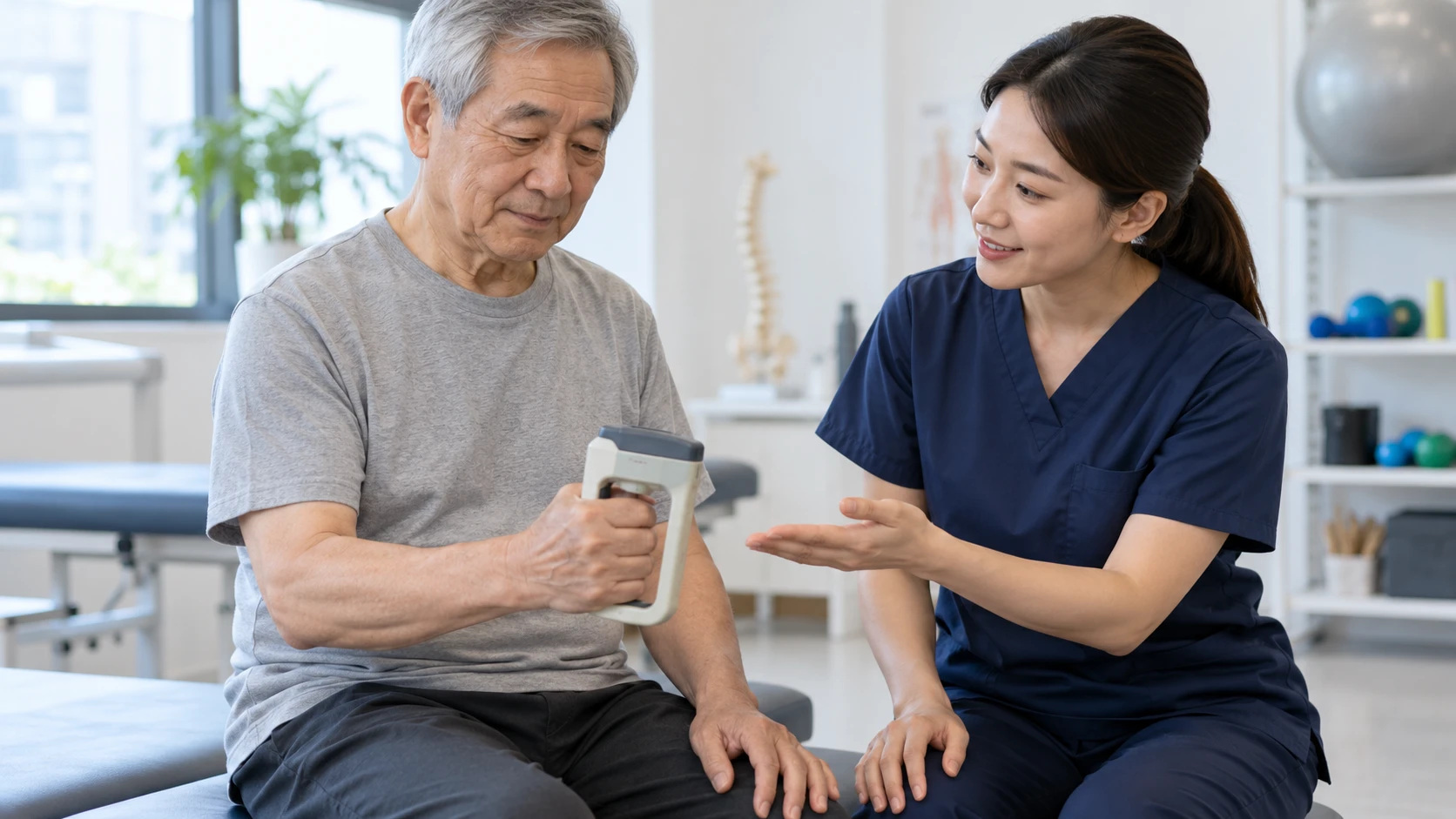
Who did this review study?
The 2025 systematic review and meta-analysis included 22 randomized trials with 1,017 adults aged 19–78 without upper-limb dysfunction. It examined effects of different hand-strength and proprioceptive programs on grip strength, pinch strength and dexterity.
An average is not a guarantee for every person
Grip strength improved by a small-to-moderate amount on average, and dexterity also improved. The grip-strength prediction interval crossed zero, indicating results may vary across settings; the pooled pinch-strength effect was not statistically significant. Bias risk, measurement differences and few studies for some outcomes limited evidence quality. The review cannot predict how many kilograms an individual will gain.
What does this review not prove?
It combines varied hand-training programs, not a dedicated SJ200 trial. It cannot establish a product’s effects, disease prevention or longer life. Results from people without upper-limb dysfunction should not be directly applied to injury or post-surgery rehabilitation.
What it means for this classroom
The classroom first helps you understand movement and manageable difficulty, then training records and whole-body activity. Hand mobility, soft resistance and formal strength work have different uses; understand your needs before buying equipment.